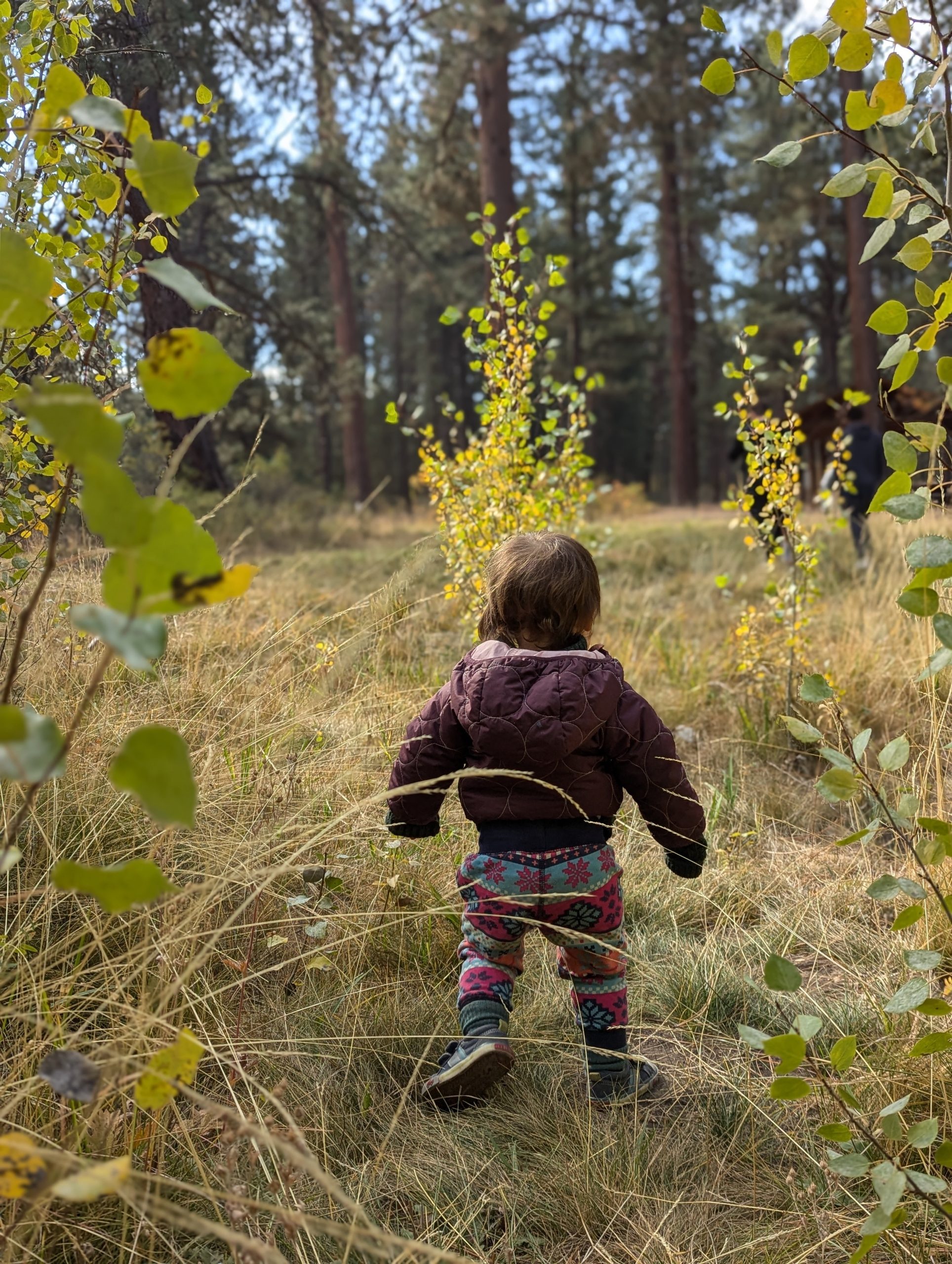

Taking occupational therapy into the community to help kids and teens build the skills they need to live their best life.
Do you ever worry if your child has the tools they need to reach their goals??
Our world is often designed for neurotypical minds and people with diverse ways of thinking and processing can face unnecessary barriers. I believe in teaching how to adapt environments to embrace neurodiversity while equipping our children/teens with practical skills to navigate their daily lives. Unlike traditional clinic settings, I bring occupational therapy into the community. Why? Because this is our natural environment; this is where we live day to day. This is where the unpredictable happens: where we learn to navigate social situations, unexpected sensory experiences, and changes in plans. This is where we put our coping tools to use and learn to self-advocate for our needs.
Examples of skills we might work on include:
- self-confidence
- endurance
- strength
- perseverance
- attention
- sensory processing
- problem solving
- flexibility
- body awareness
- safety awareness
- self advocacy
- self awareness
Philosophy
I believe in the transformative power of play and meaningful connection. My approach is rooted in the understanding that we all learn and grow through play, whether we’re 5 or 18 or 45. Play can be so many things: a game of hide and seek, making a craft from materials you find outside, or adventure sports such as stand up paddle boarding or rock climbing. I partner closely with families, recognizing them as essential members of each child or teen’s therapeutic journey and empowering them with tools to support their child or teen’s development.
I believe in honoring each person’s voice and autonomy, celebrating their unique strengths while nurturing areas for growth. This therapeutic environment fosters vital social-emotional skills, teaching children and teens how to understand their bodies and feelings, regulate their responses, and build meaningful connections within their community. Through respectful, collaborative relationships with both children/teens and their families, the goal is to create a supportive space where every child or teen can thrive in their own special way.
How do I get started?
- Click on the button above ‘Contact Outdoor Play Therapy’ to give more details about your concerns
- I will contact you to determine together whether Outdoor Play Therapy is the best fit for your child
- An evaluation will be setup and together we will come up with a plan on how to nurture your child’s development
Insurance
Now accepting: Pacific Source, Medicaid, Regence Blue Cross Blue Shield
Out-of-pocket: Sliding scale of $25-$45 per 15 minutes of treatment session and $150-$200 per evaluation.
Questions about insurance: If your insurance is not supported and you feel like this therapy would be the best fit for your child, please fill out the form above explaining this. Outdoor Play Therapy strives to serve all and will look into credentialing with your insurance.
-

Outdoor therapy provides a welcoming, safe space where every person’s identity is valued and respected. No matter your faith, cultural background, sexual orientation, gender identity, or ethnicity – nature’s healing spaces are here for you.
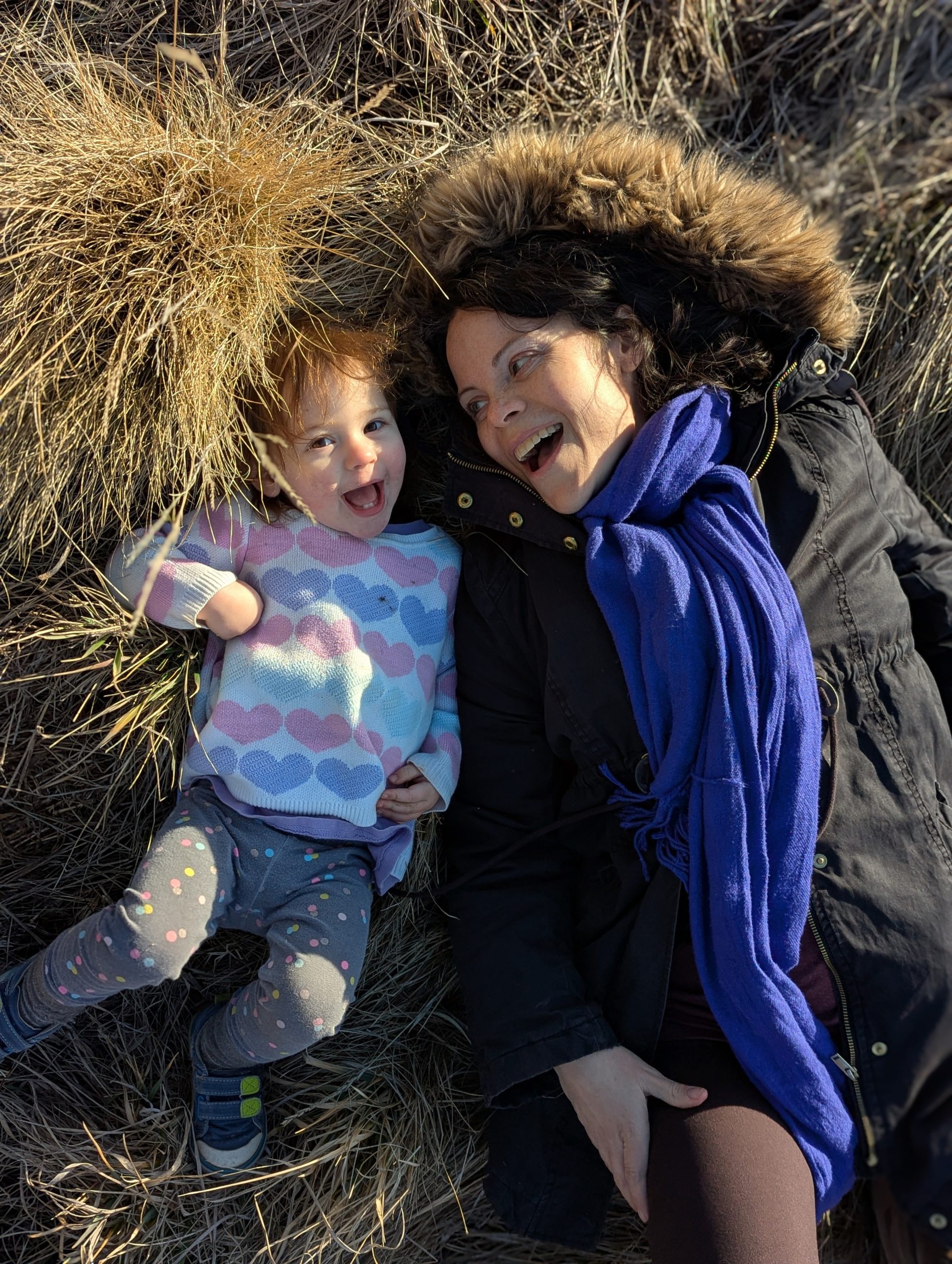
About Michelle Thiessen OTR/L
I’m an licensed occupational therapist and mom to two beautiful kids. My love of the outdoors has been my peaceful sanctuary through some of the hardest moments in life. I’m thrilled to bring together two of my biggest loves: kids and the outdoors to hopefully share the power this connection can bring.
In my early years, I ran a community supported agriculture (CSA) small scale farm and worked with classrooms of kids to explore the wonders of farming. After graduating in 2018 from Colorado State University, I trained at STAR (Sensory Therapy and Research) institute in Denver, CO and gained a deeper understanding of treating kids with sensory processing differences. Afterwards, I moved back to Oregon and began my work as an occupational therapist in an outpatient clinic. There I began embracing the outdoor spaces at the clinic including the playground, gardening, barn activities, and hippotherapy as tools for therapy. I have also worked in early intervention, early childhood special education, and home pediatric care.
In my leisure time I enjoy hanging out with my husband and kids, rock climbing, backpacking, snowshoeing, mountain biking, gardening, making crafts, dancing, and cooking. Bend is a beautiful place to call home and I feel fortunate to be part of this community.
Research Supporting Therapeutic Benefit of Thoughtful Movement (movement done in adventure sports) for Adolescents and Kids with ADHD
Climbing and adventure sports act as a powerful “brain-body” workout because they force the mind and body to work in perfect sync. Unlike repetitive exercise, climbing is a complex puzzle that requires sustained attention and impulse control to stay on the wall; if you lose focus or move too impulsively, you slip. This “real-time” feedback trains the brain to slow down and use a “Stop-Plan-Do-Check” strategy before every move.
As teens master these difficult motor skills, they aren’t just getting stronger—they are actually “upgrading” their brain’s operating system. The research shows that this type of coordinative movement primes the prefrontal cortex, leading to better focus, improved memory, and a greater ability to “pivot” when faced with challenges. Ultimately, the problem-solving skills learned on the rock translate into better self-regulation and focus in the classroom.
There are numerous research studies to support these ideas and the following are just a few examples:
Pan, C. Y., Chu, C. H., Tsai, C. L., Sung, M. C., Huang, C. Y., & Ma, W. Y. (2015). The effects of physical activity intervention on executive function in children with ADHD, a randomized controlled trial. Journal of Attention Disorders.
-Randomized controlled trial (the highest level of evidence), showing that the physical activity group improved significantly more than the control group in all three core executive functioning skills: inhibitory control, working memory, and cognitive flexibility.
–The Motor-Cognitive Link: The study confirmed that improvements in motor proficiency (the ability to move skillfully) were closely tied to improvements in mental switching. If a child got better at coordinating their body, they got better at “shifting” their thoughts.
–Long-Lasting Effects: They found that these cognitive benefits were still present even after the physical intervention ended, suggesting that the brain had actually “rewired” itself through the movement.
Song, Y., Fan, B., Wang, C., & Yu, H. (2023). Meta-analysis of the effects of physical activity on executive function in children and adolescents with attention deficit hyperactivity disorder. PLOS ONE, 18(8), e0289732.
-Meta-analysis (looked at 24 different studies) study looking at how physical activity executive functioning skills in youth with ADHD. They noted that the type and intensity of the movement matter.
1. The “Cognitive Loading” Factor
The meta-analysis found that exercise programs that included cognitive challenges (like problem-solving or coordination- these are key elements of climbing) were more effective for inhibitory control (impulsivity) than simple aerobic exercise.
2. Duration and Consistency
The research suggests that even acute bouts (single sessions) provide an immediate “window” of improved focus, but long-term programs (8–12 weeks) lead to lasting structural changes in the brain.
They identified which specific EF skills improved the most:
- Inhibitory control (the “brake” system): This showed the most significant improvement. It is the ability to resist distractions and think before acting.
- Cognitive flexibility (the “pivot” system): The ability to switch between different rules or concepts.
- Working memory (the “mental notepad”): The ability to hold and use information over short periods.
Hahn-Markowitz, J., Manor, I., & Maeir, A. (2011). Effectiveness of the Cognitive-Functional (Cog-Fun) Intervention for Groups with ADHD: A Pilot Study. American Journal of Occupational Therapy.
-This study showed that the best way to help teens with ADHD is through cognitive-functional activities (meaning real world activities). These are tasks that are challenging, require a plan, and offer immediate feedback.
Budde, H., Voelcker-Rehage, C., Pietraßyk-Kendziorra, S., Ribeiro, P., & Tidow, G. (2008). Acute coordinative exercise improves attentional performance in adolescents. Neuroscience Letters, 441(2), 219-223.
-This paper compared adolescents engaging in aerobic exercise vs. coordinative exercise (essentially “thinking while moving” exercise) and determined “thinking while moving” exercise is more beneficial for the prefrontal cortex (the part of the brain that helps you pay attention in school).
“Not all classrooms have four walls”